
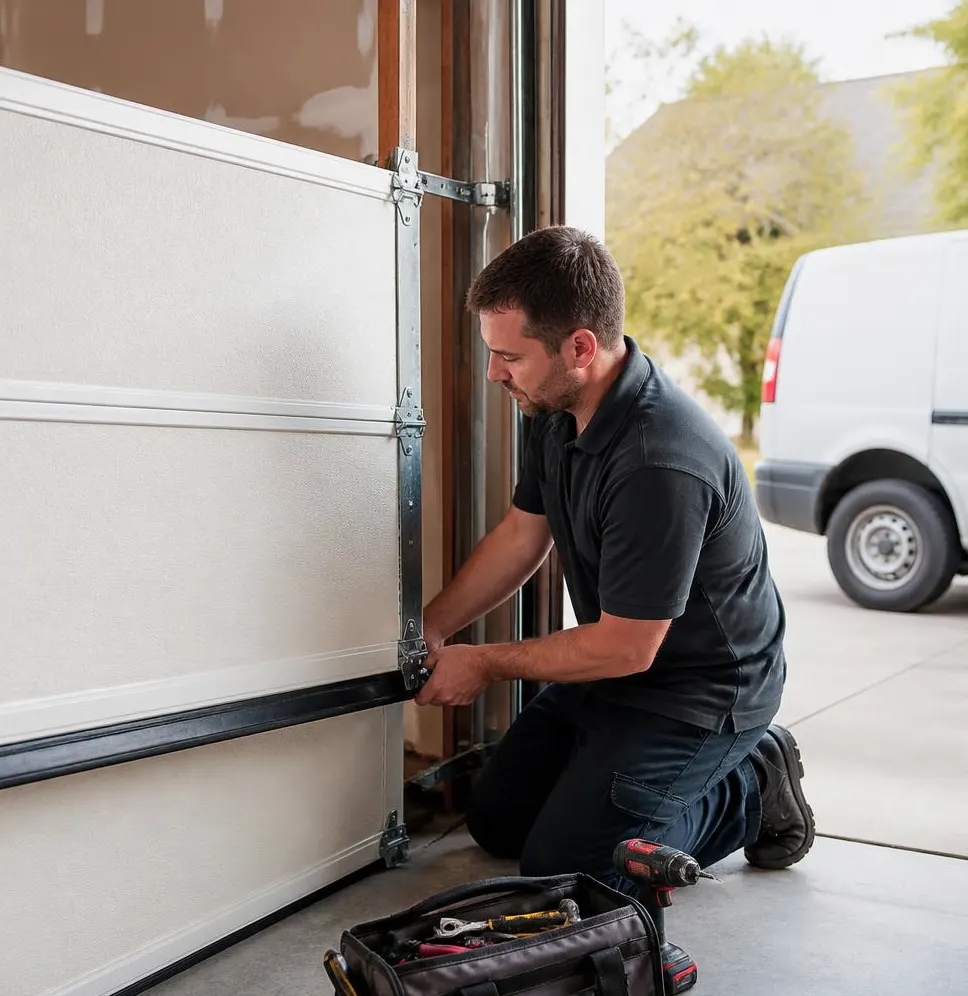
The one rule of thumb for winterizing a garage door in this part of California: clean off the dust the dry season left behind before the first rain turns it into grinding grit, and check anything rubber or metal for damage the heat already caused. The exceptions are older doors with wood panels, homes with reinforced garage walls from earthquake retrofits, and anyone whose opener sensors have been acting up all year — those all need a closer look before the wet weather settles in.
Clear Out the Summer Dust Before It Turns to Grime
Months of hot, dry weather and the occasional dusty or smoky stretch leave a fine film on tracks, rollers, and hinges. On their own, those particles are mostly harmless. Once winter rain and humidity show up, that dust mixes with moisture and turns into a gritty paste that works its way into roller bearings and grinds down metal parts faster than normal wear ever would.
- Wipe down the tracks with a damp cloth, then dry them completely before the rain arrives.
- Vacuum out any loose debris sitting in the track channels, especially near the bottom corners.
- Lubricate rollers, hinges, and the torsion spring with a silicone-based garage door lubricant — avoid heavy grease, which attracts dust rather than shedding it.
Check Weatherstripping and Seals Now, Not After the First Storm
The bottom seal and side weatherstripping take a beating from UV exposure and heat all summer long, and by the time the rainy season starts, a lot of that rubber is already stiff, cracked, or pulling away from the door. That's fine in dry weather, but once rain starts coming down, those gaps let water pool at the base of the door, which can warp wood panels, soak stored boxes, and create standing water that never fully dries between storms.
- Close the door and check for daylight visible at the bottom or along the sides.
- Press on the rubber seal — if it feels brittle or cracks instead of flexing, it needs to be replaced before the rain, not after.
- If your driveway slopes toward the garage, a threshold seal strip is worth adding now, since it's a lot easier to install on a dry floor than a wet one.
Cold Mornings Are Harder on Springs Than You'd Think
El Monte doesn't get hard freezes, but the swing from summer highs to cooler winter mornings still puts stress on torsion springs that have already spent months expanding and contracting with the heat. Metal that's been cycling through that kind of temperature range all year is more prone to fatigue right around the seasonal transition, which is exactly why late fall and early winter tend to be when older springs finally let go.
Watch for a door that suddenly feels heavier when you lift it manually, one side rising faster than the other, or a loud bang from the garage that usually means a spring has already snapped. None of this is a DIY fix — a torsion spring under tension can cause serious injury if handled without the right tools, so this is one repair worth leaving to someone experienced.
Give the Opener and Safety Sensors a Once-Over
Cool, damp mornings after a rainstorm can fog up the photo-eye sensors near the bottom of the tracks, which causes the door to reverse unexpectedly or refuse to close at all. Combine that with a summer's worth of dust sitting on the lenses, and it's easy to end up with a door that seems to have a mind of its own.
- Wipe both sensor lenses clean and confirm they're still pointed directly at each other.
- Test the auto-reverse function by placing an object in the door's path.
- Check remote and keypad batteries — cooler weather drains them faster than people expect.
Don't Skip the Track Alignment and Seismic Hardware
A lot of garages in this area have earthquake retrofit bracing, reinforced wall anchors, or added support for the opener rail. Hot summers can loosen that hardware as wood framing and metal brackets expand and contract, and once winter rain softens things further, loose brackets or slightly bent track sections become a lot more noticeable — doors drift off-track, scrape, or bind partway through their cycle. A quick check of the vertical track brackets and any visible seismic bracing is worth doing while you're already inspecting everything else.
When to Call El Monte Garage Door
If you're hearing grinding sounds that don't go away after cleaning the tracks, if the door feels noticeably heavier than it used to, or if the sensors are inconsistent even after wiping them down, it's time to bring in a technician rather than keep troubleshooting. Our Garage Door Maintenance service covers the full seasonal check — lubrication, hardware tightening, sensor alignment, and a visual inspection of springs and cables — so small issues get caught before a storm makes them worse. If a spring has already snapped or shows visible gaps or rust, our Spring Replacement service gets it swapped out safely and brings the door back into proper balance.
If you're in El Monte, South El Monte, Baldwin Park, West Covina, Rosemead, Temple City, Arcadia, or Covina and want your garage door ready before the rain really sets in, call El Monte Garage Door — we'll get it sorted before winter makes the decision for you.